NEVER HAPPENED AGAIN, KÁRAHNJÚKAR

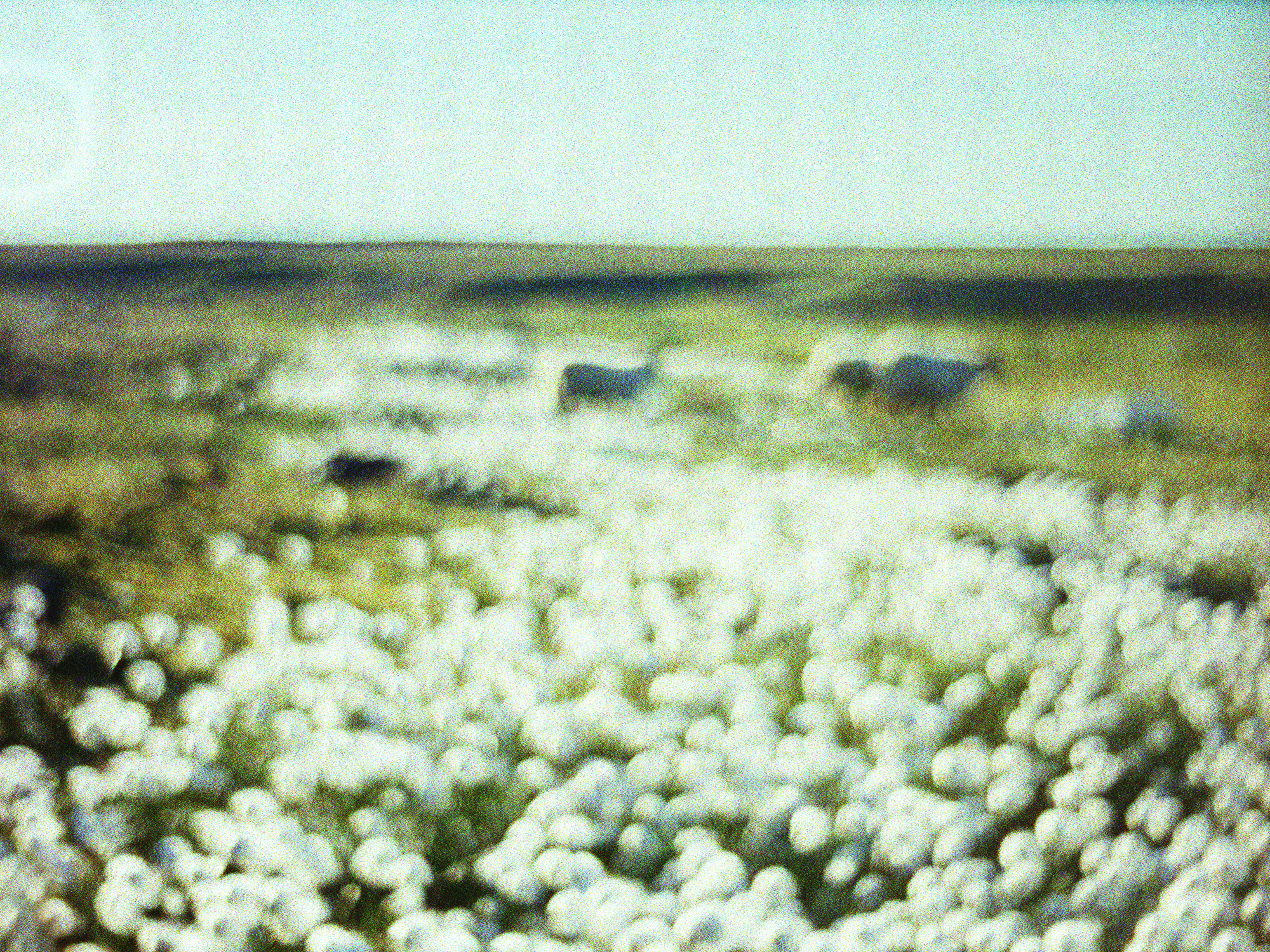
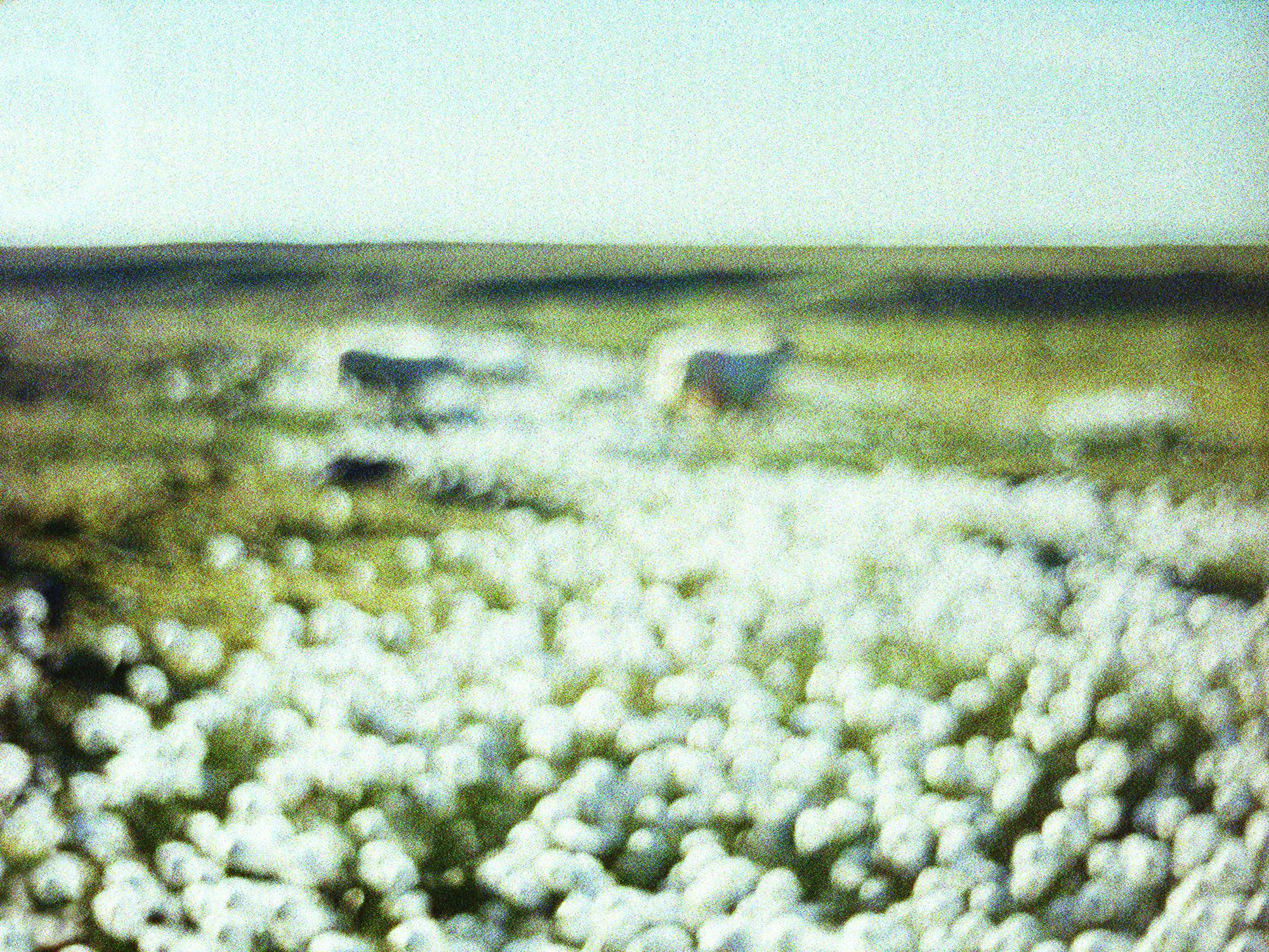
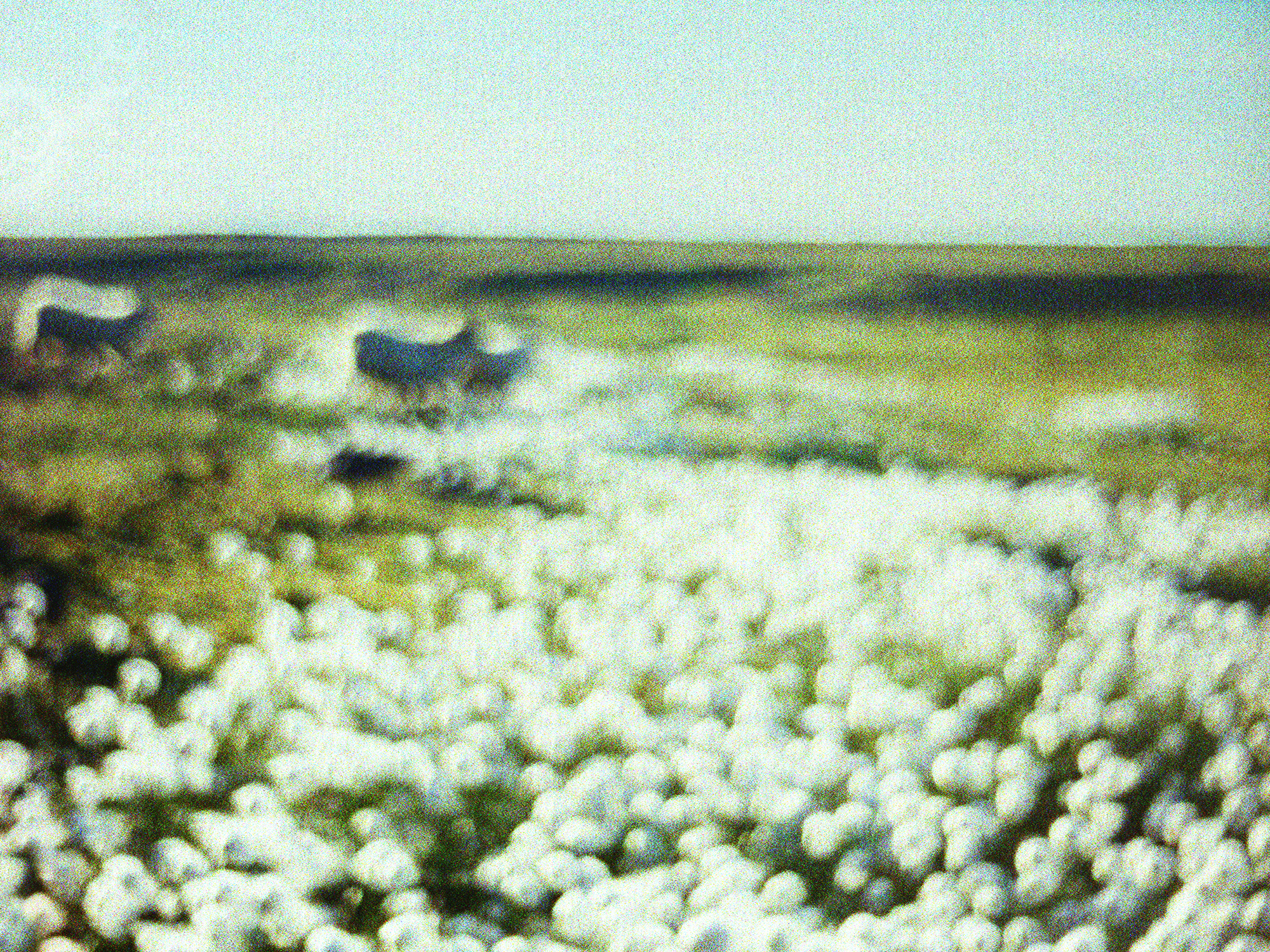
Never Happened Again is an ongoing series of single-channel video projection works captured with a Bolex Reflex 16mm film camera. Never Happened Again: Kárahnjúkar was captured in the Eastern Highlands of Iceland, near the site of the largest power plant in Iceland. The dam has a 193-meter-tall concrete-faced rockfill dam—the largest of its kind in Europe. In 2006, Méndez joined the protests against the dam, which was completed in 2008; the 690 MW facility harnesses glacial rivers to power the Alcoa aluminum smelter in Reyðarfjörður. Méndez’s camera points away from the mining trucks and protests, and towards that which is to be lost—grasslands and grazing sheep, as if a sudden glitch of memory interrupted the event.
Méndez’s interests in issues of perception expand into the perception of light by the apparatus— in this case, her 54-year-old hand-cranked Bolex—and that of the film stock. Through this mechanism, ‘chance’ is introduced into the making of the image, resulting in radiant chroma floods intensified by the irregular flickering of the frames, set against a subject matter of a mundane nature—a grass field in a park, an urban Eucalyptus tree, a field of cotton flowers where sheep graze. “The work involves multiplication through the recombination of derivatives, that, in being combined, deoriginate that from which they derive. What leads one to video here, however, is an idea less of flow than of intensities, which is to say of transmission rather than embodiment.” Jeremy Gilbert-Rolfe, Beauty and the Contemporary Sublime.
Méndez’s interest in the nature of matter—in cycles and systems, specifically the forces and cross-rhythmic tensions that make natural phenomena emerge—stems from her growing up in two seemingly entropic environments, México City and the Mexican jungle, where she would follow her father in pursuit of Mayan archaeology. Common to both environments is hypercomplexity, multiplicity, and constant change. Méndez’s move to Los Angeles and her expeditions to geologically young Iceland have furthered this impetus.
Méndez’s work is driven by the concept of élan vital, developed by the French philosopher Henri Bergson, who described it as “the explosive internal force that life carries within itself,” which he claimed animates all being. Her Never Happened Again series is further informed by the ideas of the composer Karlheinz Stockhausen, who said: ‘We are all transistors, in the literal sense. People always think they are in the world, but they never realize that they are the world.’ As cultural theorist Sanford Kwinter explains, Stockhausen means that there are no phenomena in the natural world that do not manifest themselves as vibratory or rhythmic phenomena. Those vibrations attack us; they modulate us and, in the end, become us.