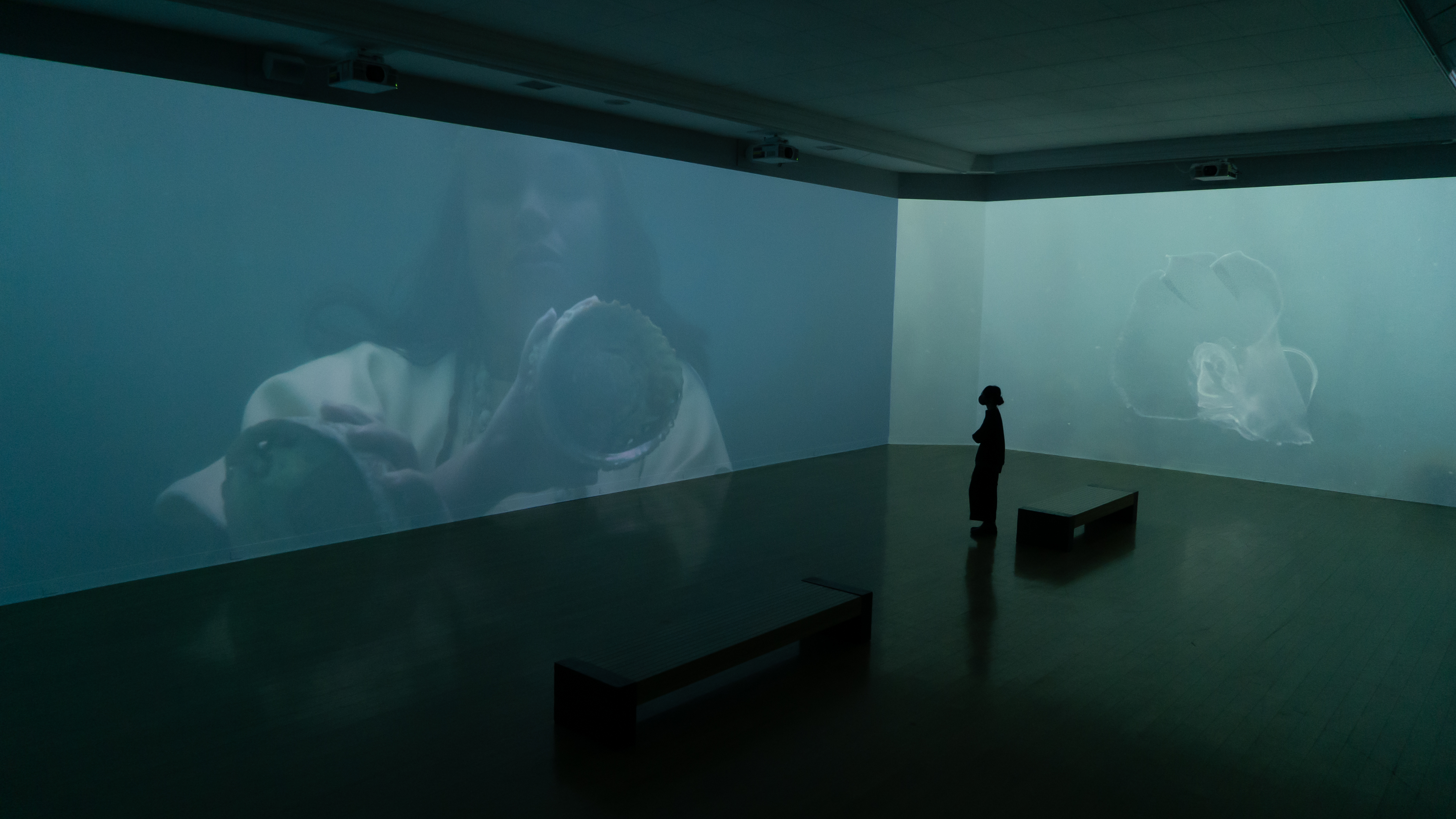
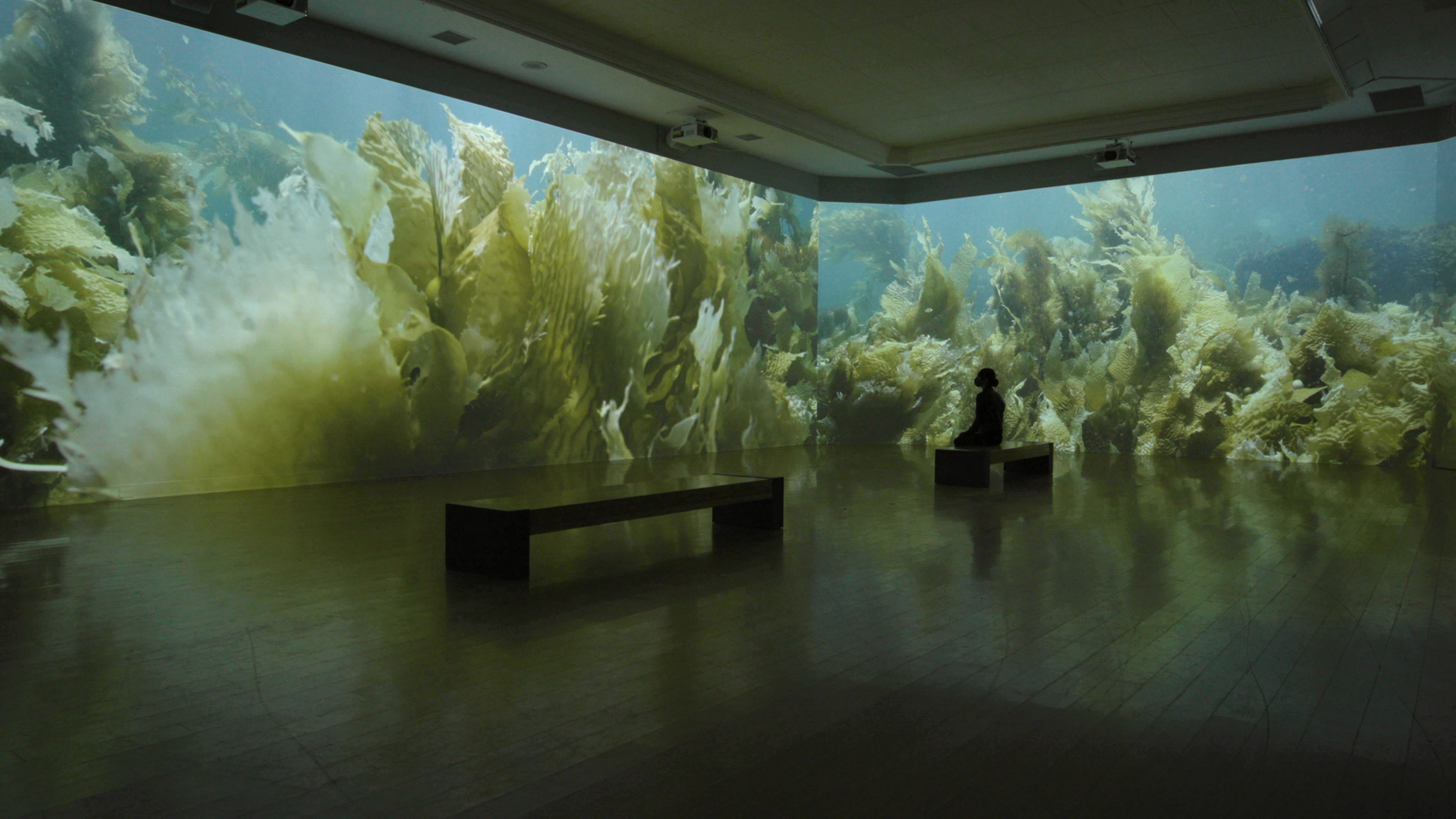
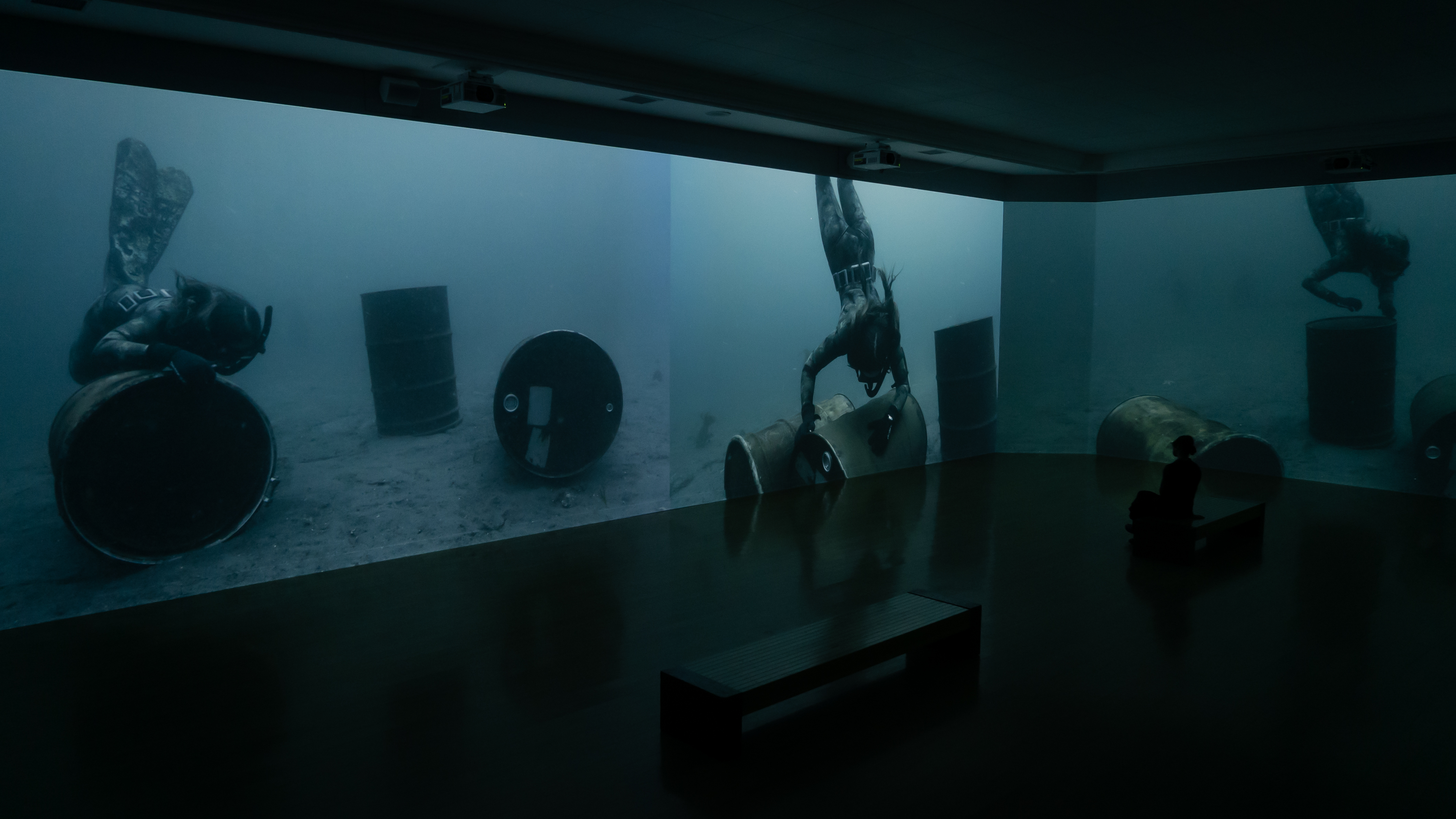
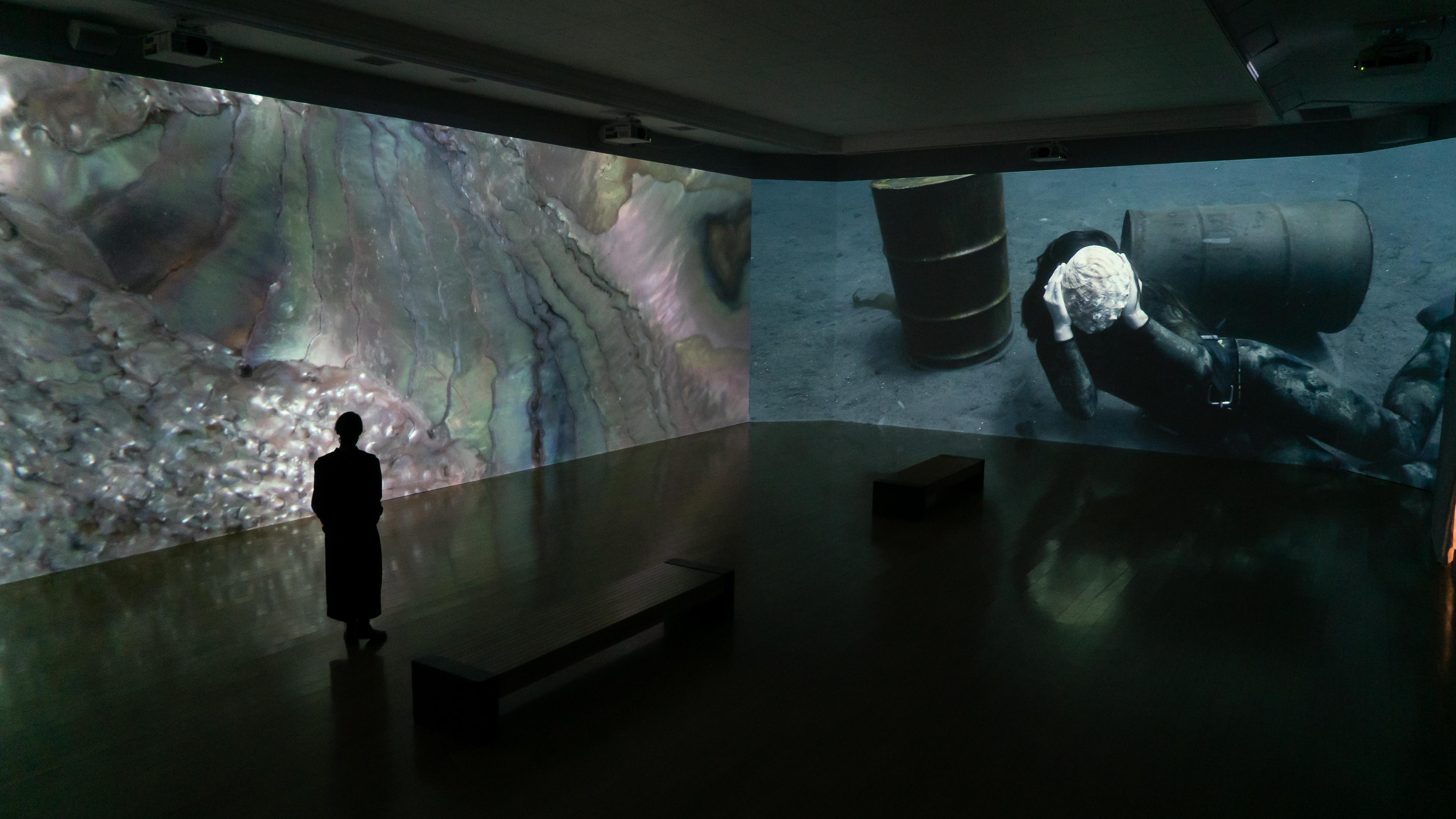
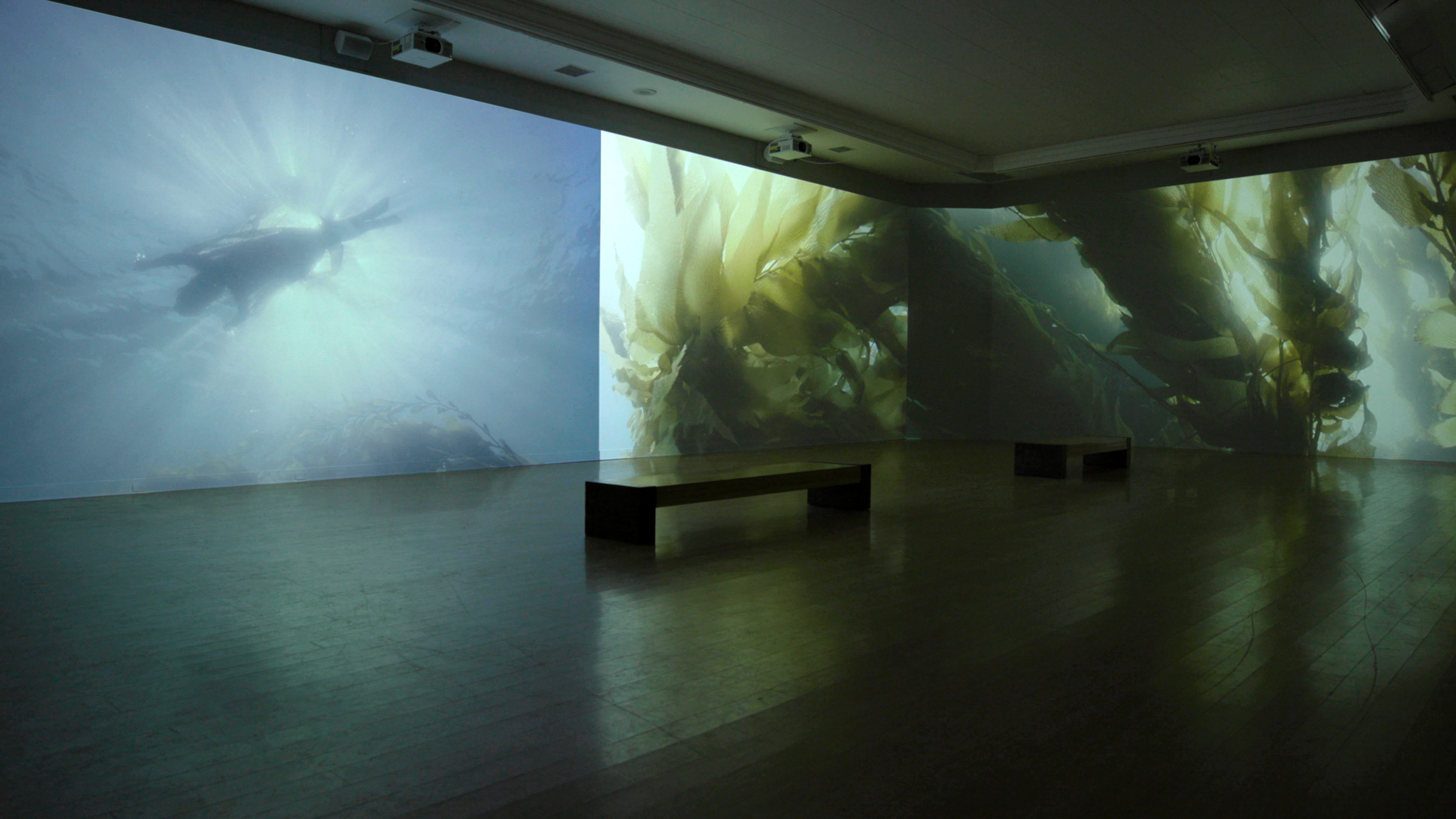
THE SEA AROUND US

360° Immersive multimedia installation
6 video projectors, 7.1 Sound System, 1 media player
15 ft. X 51 ft. x 34 ft., ~1,377 sq. ft. / 34:00 min. (loop)
Laguna Art Museum, Laguna Beach, CA
2022
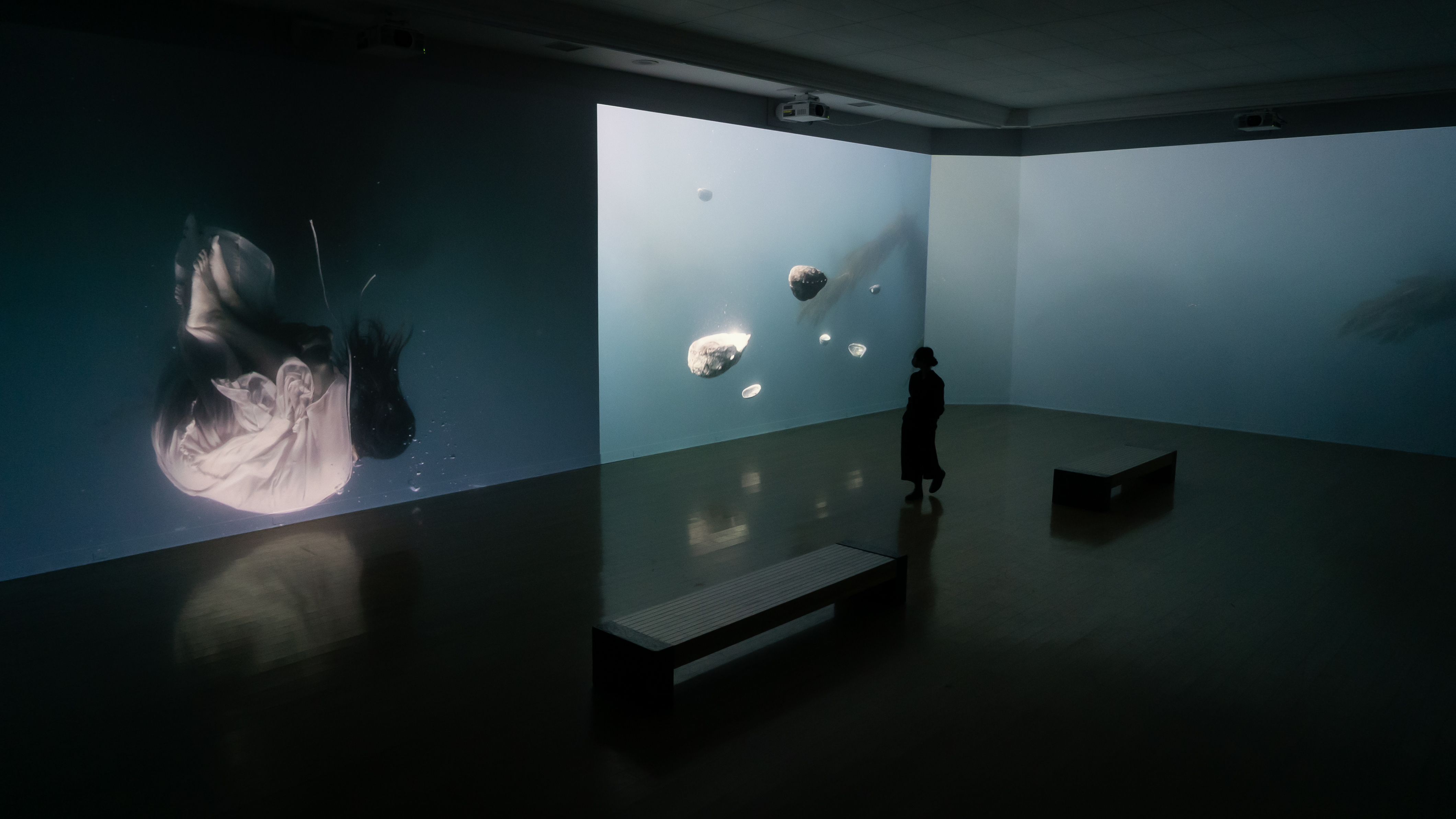
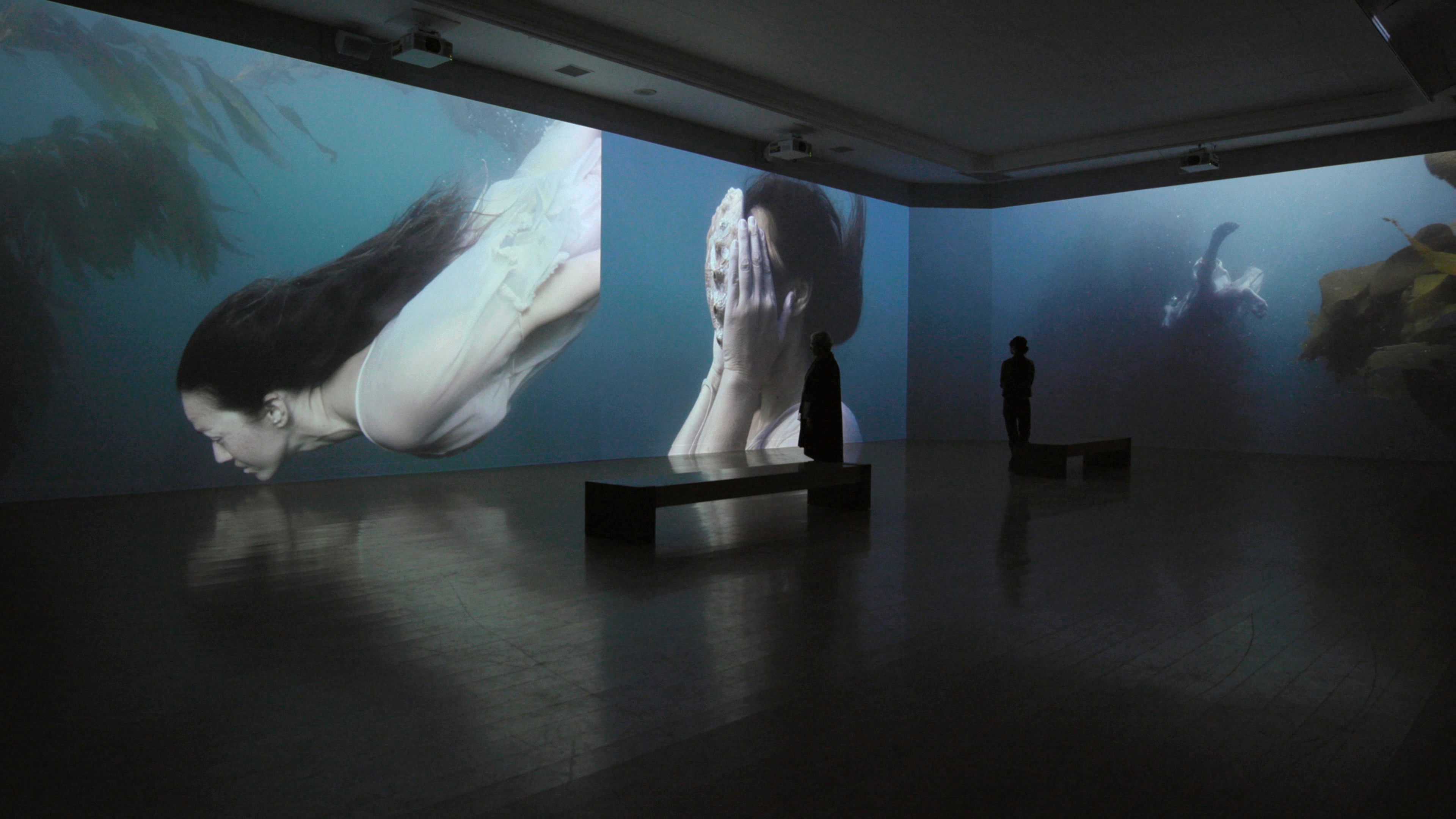
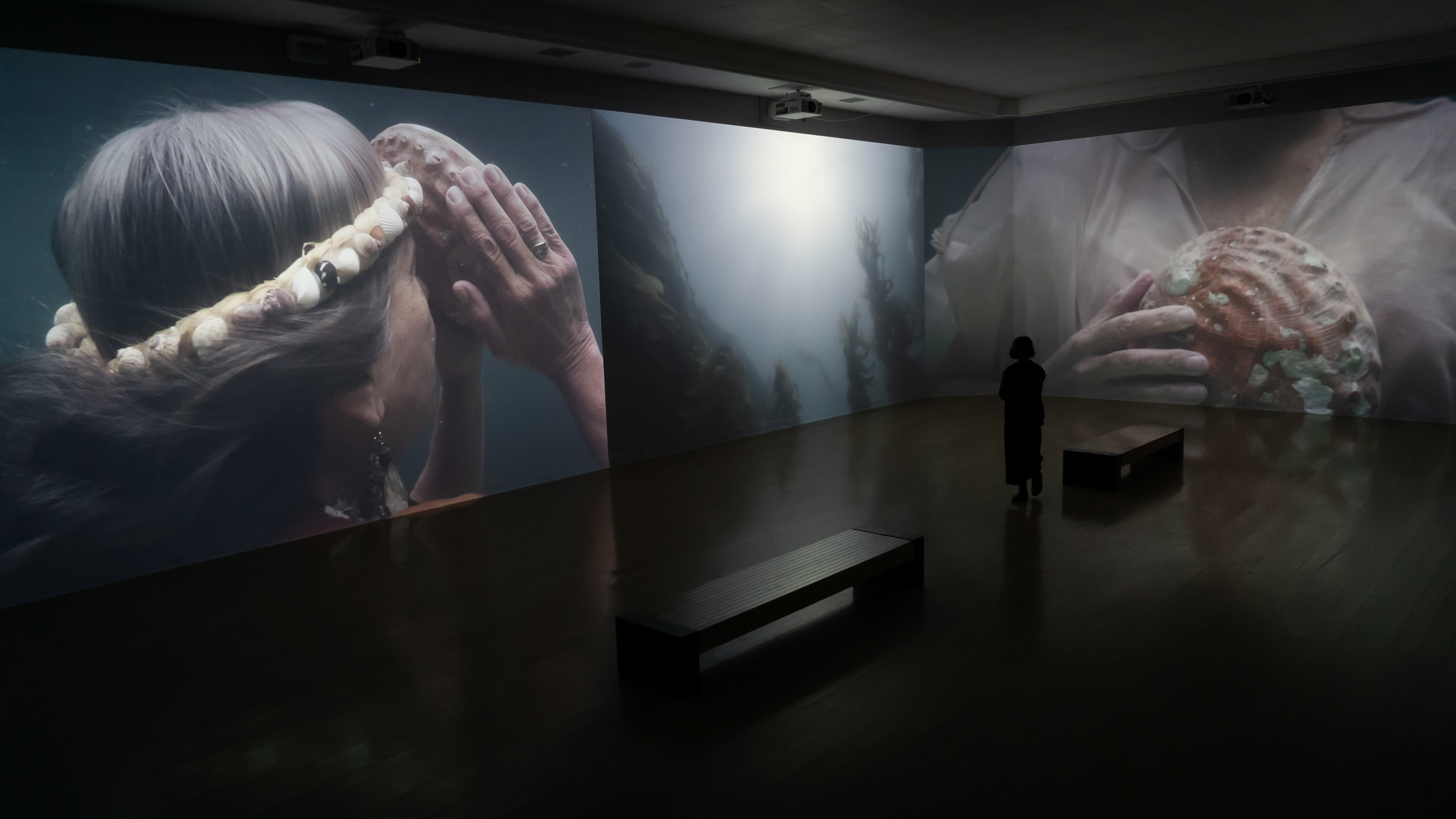
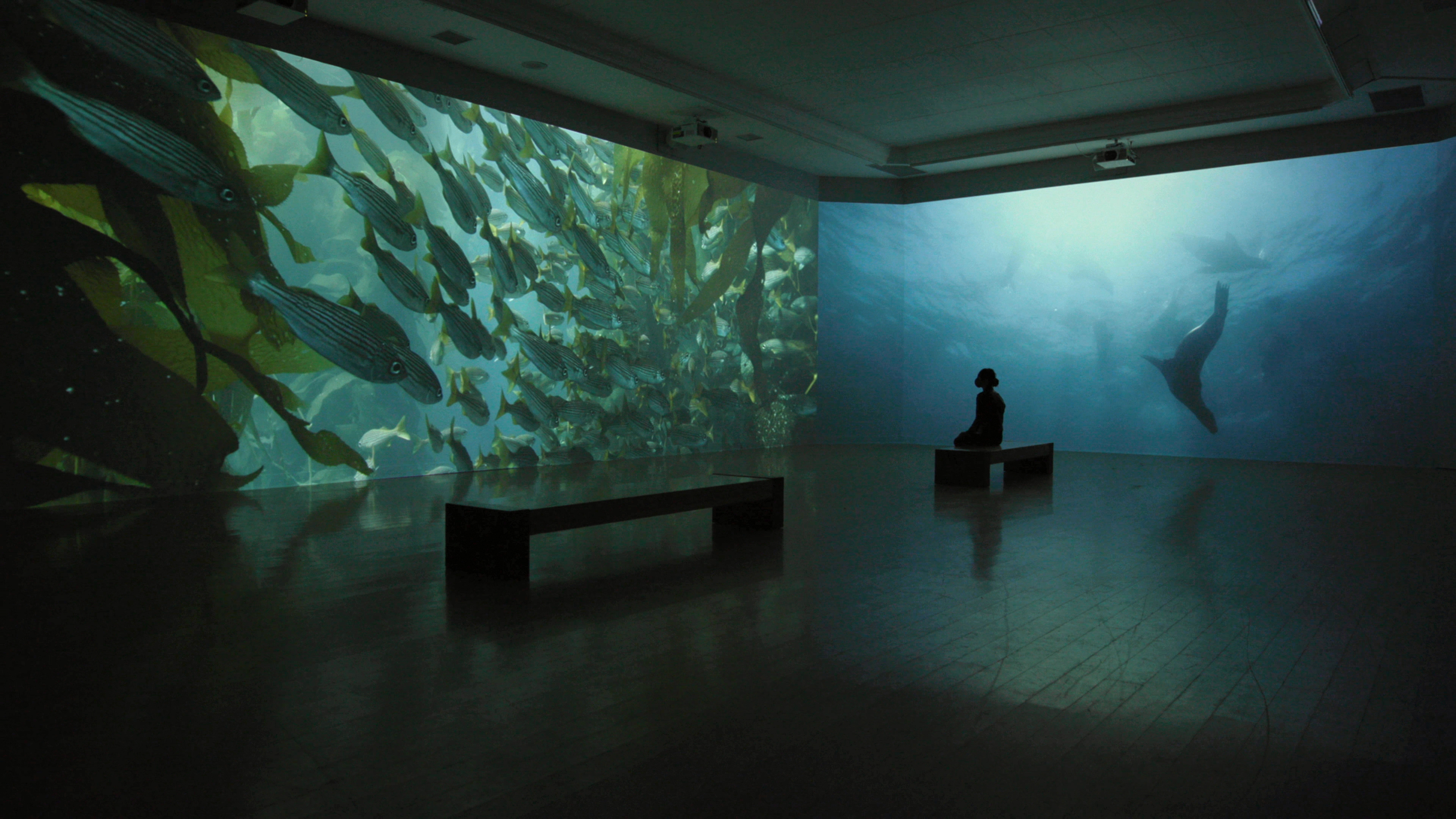
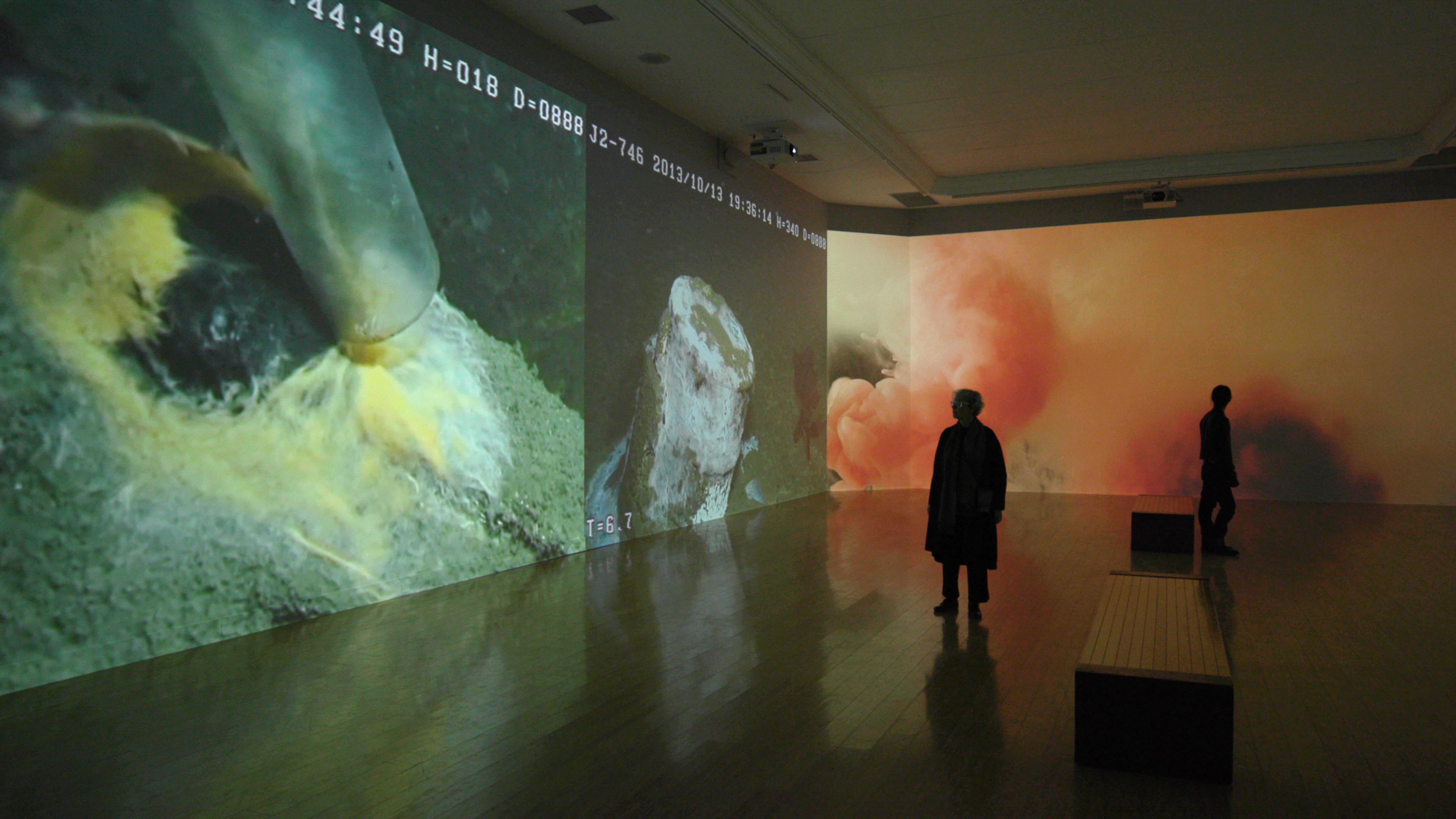
In my video installation The Sea Around Us, commissioned by the Laguna Art Museum for the 2022 Art & Nature Festival, I directly reference Rachel Carson’s book of the same title. The installation is a 360° immersive and cinematic experience that portrays the adjacent Pacific Ocean as a fully animated body and a place of deep interconnectedness, where multispecies kinship fosters a sense of awe within us.
The Sea Around Us, 2022. 360° immersive experience consisting of 6-channel HD video and 7.1 surround sound. 34 min. (loop). 1,377 sq.ft., 51 ft. long x 34 ft. wide x 15 ft. high.
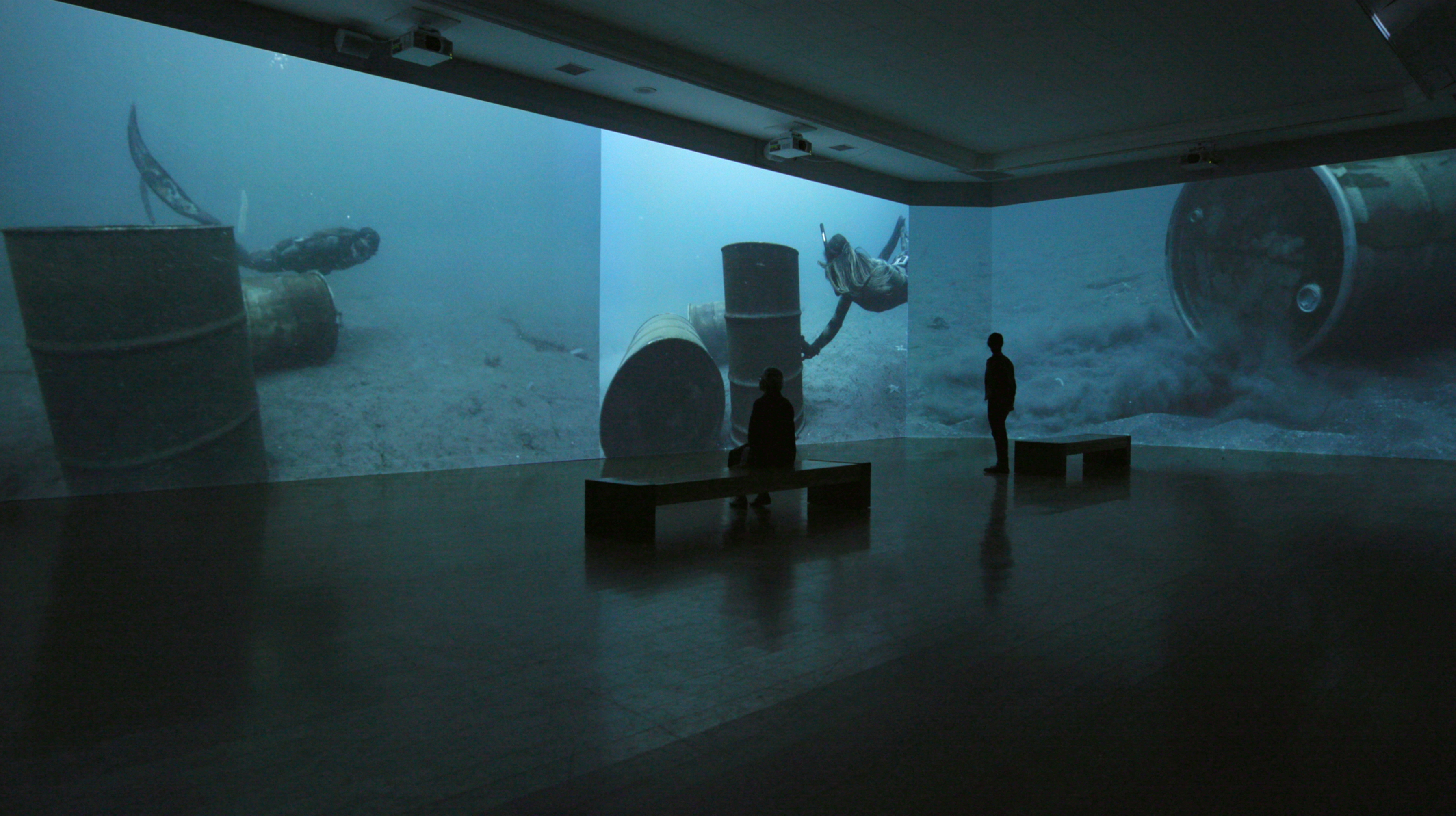
The Sea Around Us contends with the legacy and ongoing effects of toxic waste dumping off the Southern California coast. Beginning in 1947 and continuing through at least 1972, the Montrose Chemical Corporation and others dumped over 25,000 barrels of the pesticide DDT+, acid sludge, and radioactive waste into the ocean near Santa Catalina Island. Thanks to the advocacy inspired by Rachel Carson, in 1972, the Environmental Protection Agency largely banned the use of DDT in the United States because of its adverse environmental effects and its potential risks to human health. Investigation by scientists is ongoing, but it appears that the equivalent of around half a million barrels of chemicals, including radioactive waste, was dumped into the ocean at fourteen sites between Palos Verdes and Catalina Island. These toxic materials have bioaccumulated across the food web, affecting the lives of our human and nonhuman kin, particularly local marine mammals who have the highest cancer rates on the planet.
The Sea Around Us contends with the legacy and ongoing effects of toxic waste dumping off the Southern California coast. Beginning in 1947 and continuing through at least 1972, the Montrose Chemical Corporation and others dumped over 25,000 barrels of the pesticide DDT+, acid sludge, and radioactive waste into the ocean near Santa Catalina Island. Thanks to the advocacy inspired by Rachel Carson, in 1972, the Environmental Protection Agency largely banned the use of DDT in the United States because of its adverse environmental effects and its potential risks to human health. Investigation by scientists is ongoing, but it appears that the equivalent of around half a million barrels of chemicals, including radioactive waste, was dumped into the ocean at fourteen sites between Palos Verdes and Catalina Island. These toxic materials have bioaccumulated across the food web, affecting the lives of our human and nonhuman kin, particularly local marine mammals who have the highest cancer rates on the planet.
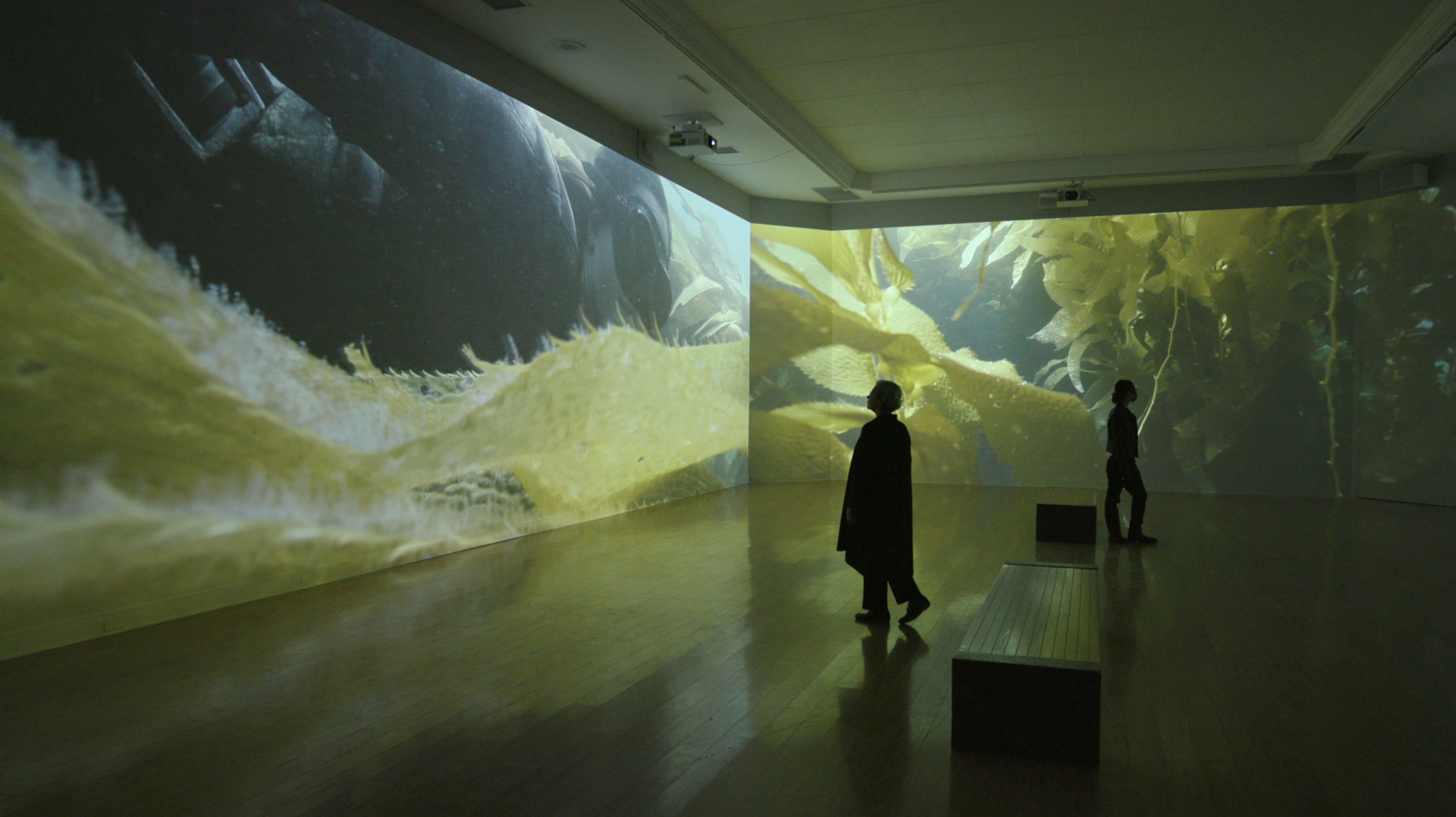

In The Sea Around Us, we are guided by the abalone, a shelled marine snail that reflects the time immemorial of the sea, informing the imagery and cosmology of cultures both ancient and present. These include the Tongva people, who began living on Catalina at least 8,000 years ago, and the Acjachemen, who have lived along the coast of what is now Orange County for at least 10,000 years. Poetry inspired by the Tongva worldview frames The Sea Around Us. Flowing through the experience is an Acjachemen song intended to encourage listeners to embrace the natural world through alternative values and worldviews. Ultimately, we are asked to be courageous enough to face our exploitative legacy, to take restorative action, and to avoid repeating its folly by being fully engaged as we collectively reckon with and care for our troubled world.
Over the last century, extractivism and ocean control have engendered environmental catastrophes in the California Bight, one of the most urbanized, industrialized, and yet biodiverse bays on the planet. By featuring local Indigenous voices prominently, The Sea Around Us is a call to action to confront the gravity of today’s environmental crises by expanding our fixed terrestrial sensory experience into the ever-changing waterscape of the ocean's depths. Immersed in local Indigenous people’s waterscapes long enough, I believe that we can inspire a much-needed shift in the ways in which we relate to the ocean and the natural world at large.
I commissioned composer Drew Schnurr to create the score for The Sea Around Us, which he describes as follows: “The score reflects our oceans’ beauty, depth, and power, framed by the perspective of feminine strength and indigenous wisdom. A unity of both sung and spoken female voices blended with the sounds of sea life (organic and robotic) represents our collective imperative to reëstablish balance and accordance with our natural world.”